
A list of important signed graphs, some with figures.
\(\large \text{Odd } K_{t} \), \(\large PC(k) \), \( \large P_{q} \), \( \large A_{q} \), \( \large K_{4} \) (odd)
Odd \( K_3, K_4, K_5 \)
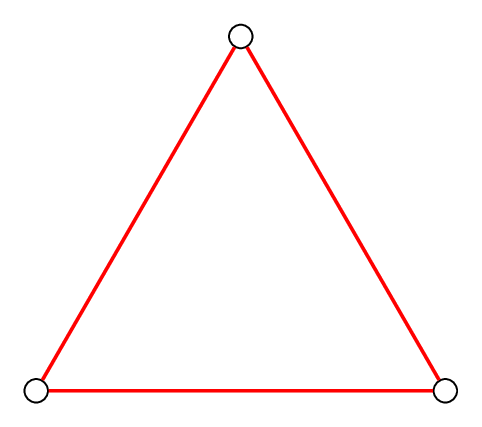 | 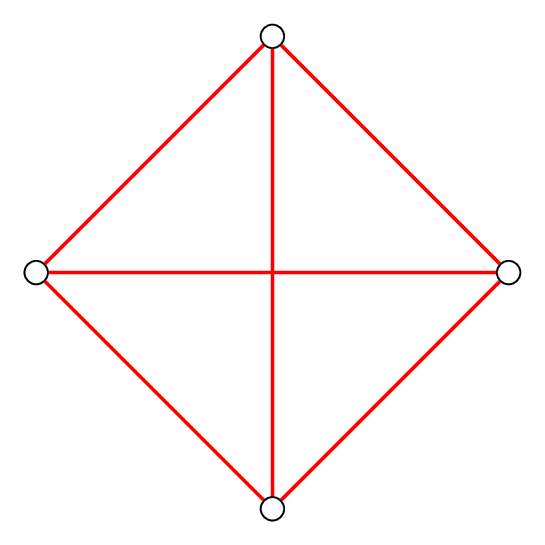 | 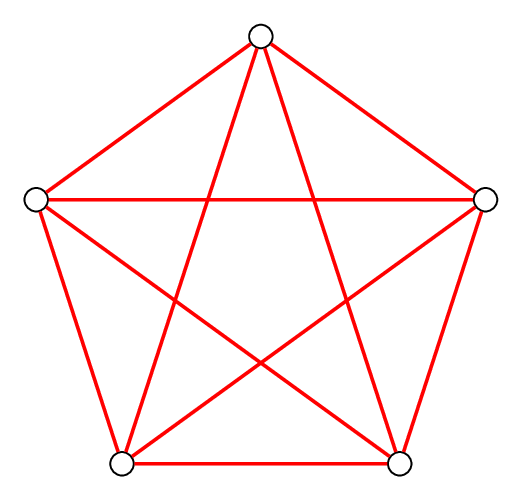 |
| \( Odd K_3 \) | \( Odd K_4 \) | \( Odd K_5 \) |
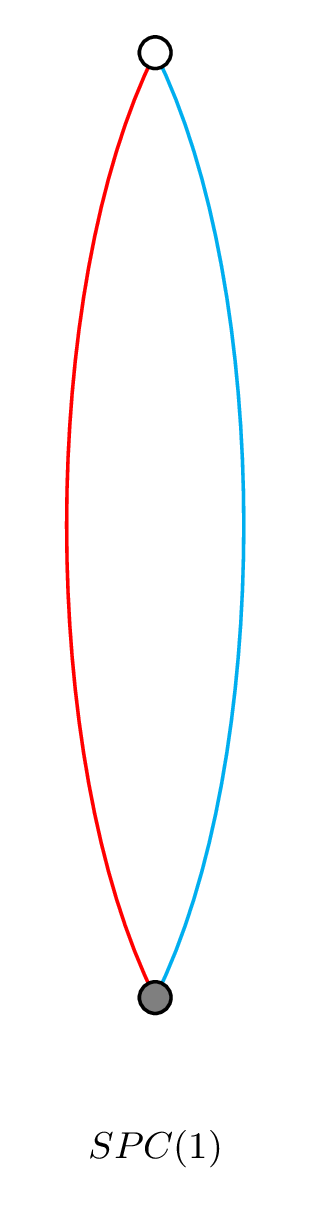
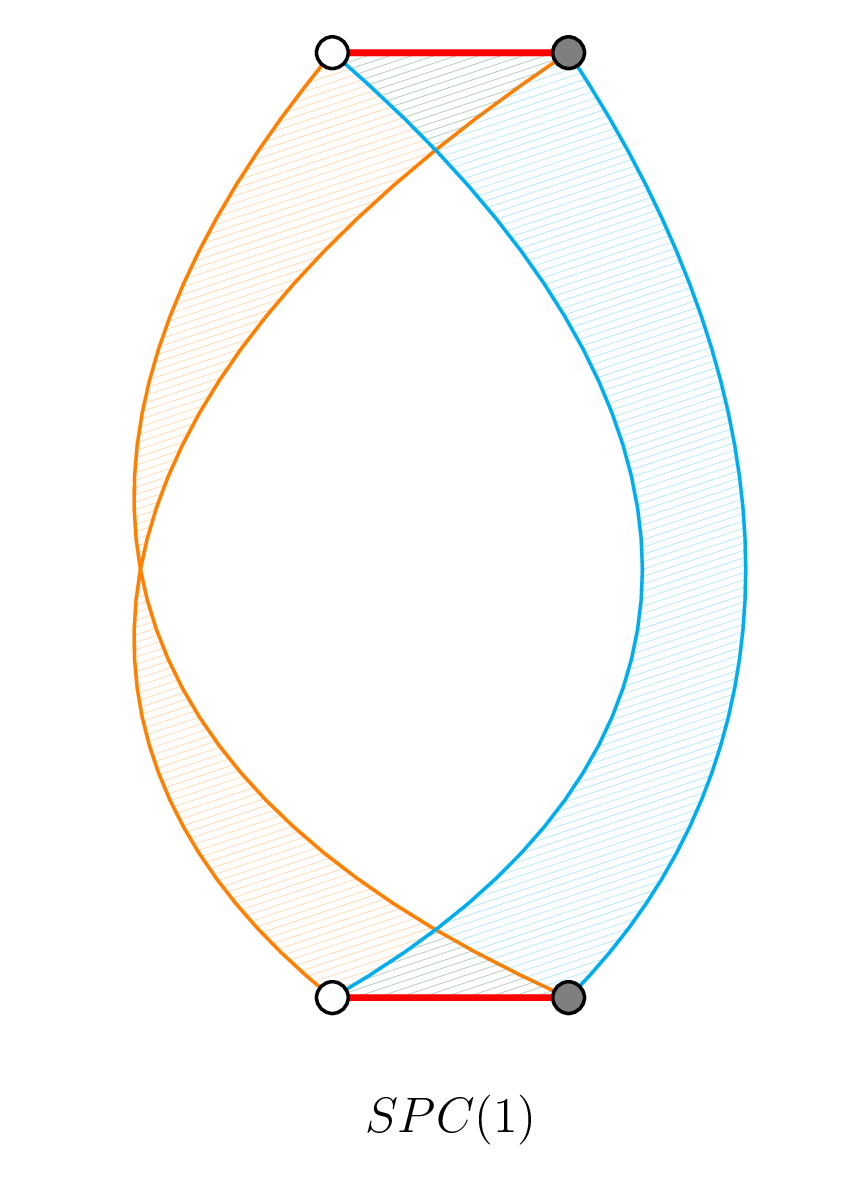
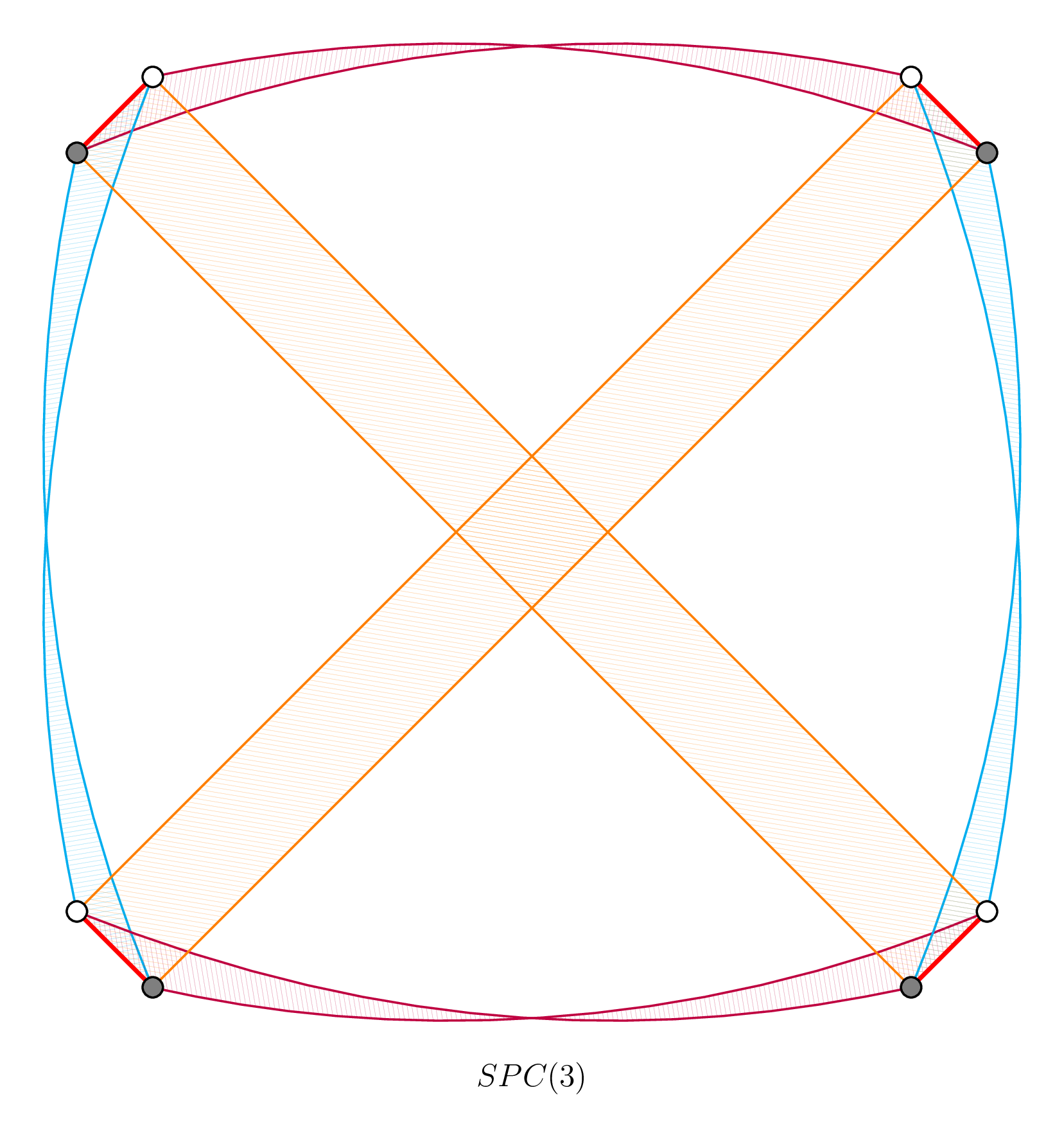
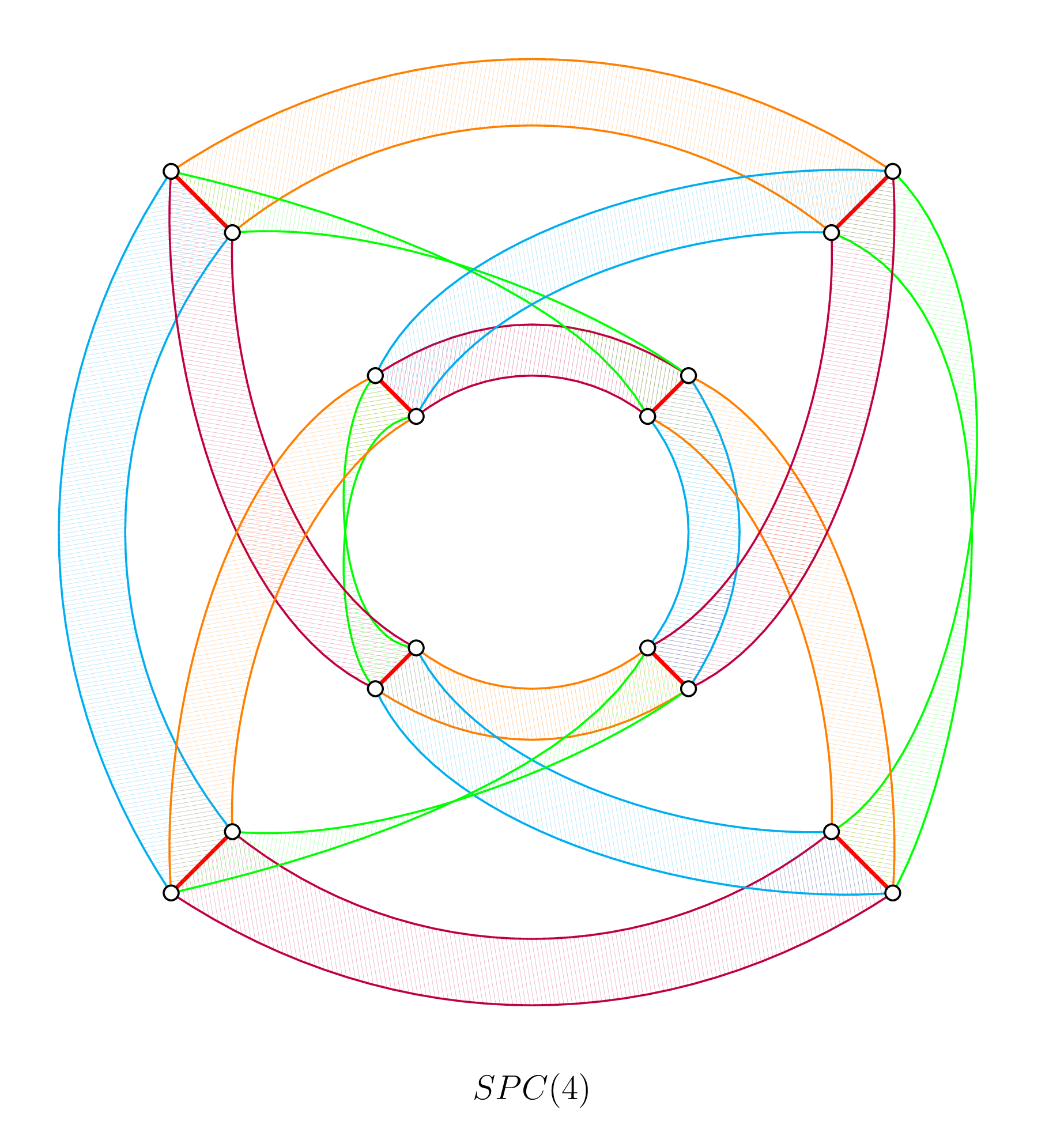
Projective cubes of dimension \(\small 2,3,4 \)
 |  |  |  |
Key conjecture concerning \( SPC(k) \)
Inductive definition: \( SPC(k) = EDC(SPC(k-1)) \). In pictures, to build \( SPC(k) \) from \( SPC(k-1) \) each vertex become a red edge with vertices colored white and gray. A red edge of \( SPC(k-1) \) become a twisted strip and all others become straight strips.
In other words, if we contract red edges of \( SPC(k) \) and replace the twisted strips with red (negative) edges, the resulting signed graphs is \( SPC(k-1) \). For more on the family see:
References
Meirun Chen, Reza Naserasr, Alessandra Sarti. Signed projective cubes, a homomorphism point of view. Journal of Graph Theory 113 (2026), no 1, 38-56. With [DOI] [PDF]
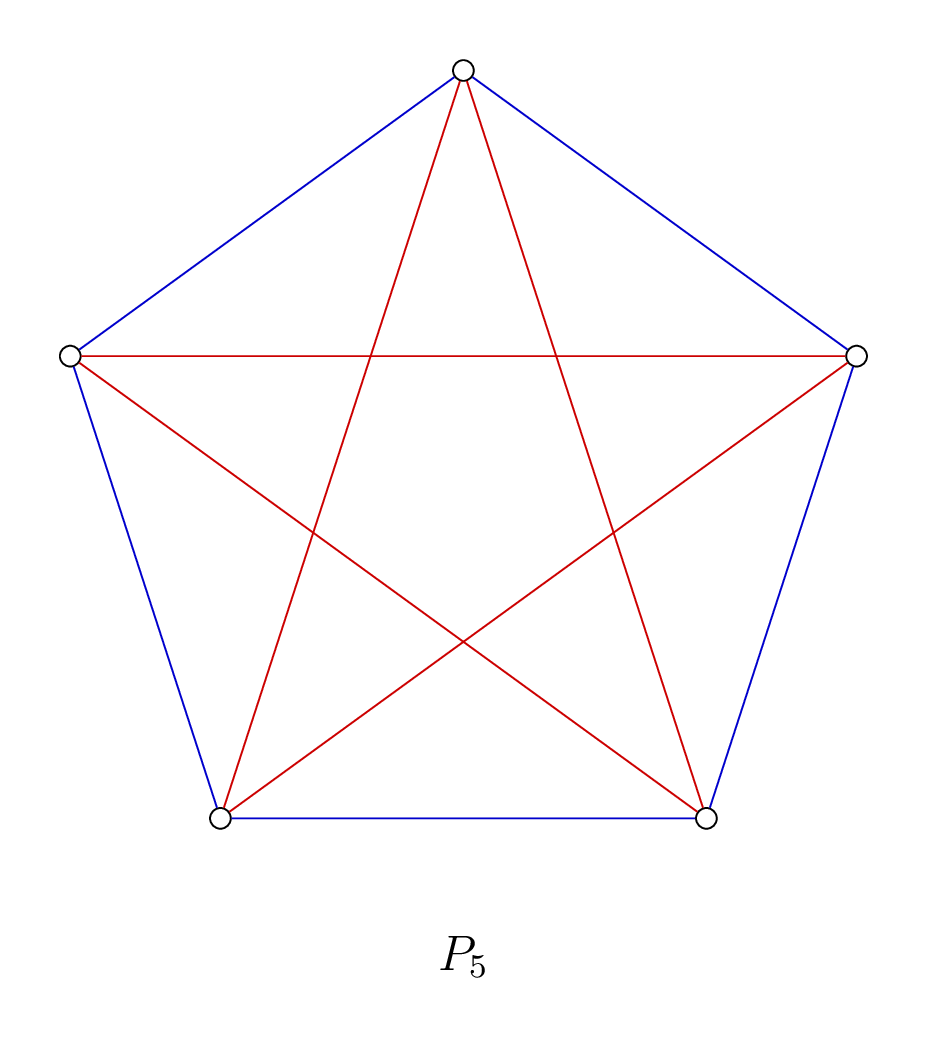
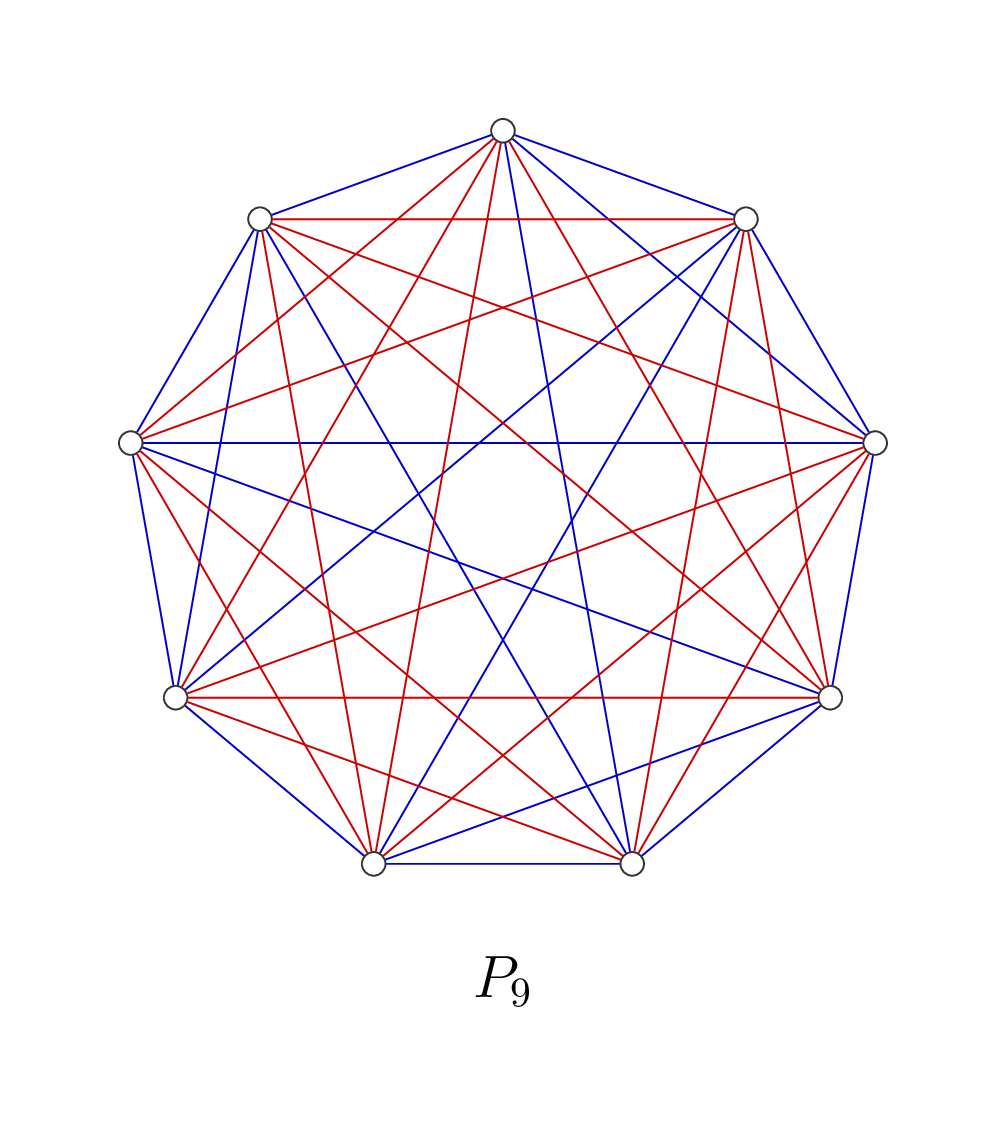
Paley signed graphs, \( q=5,9 \)
 |  |
Remark.
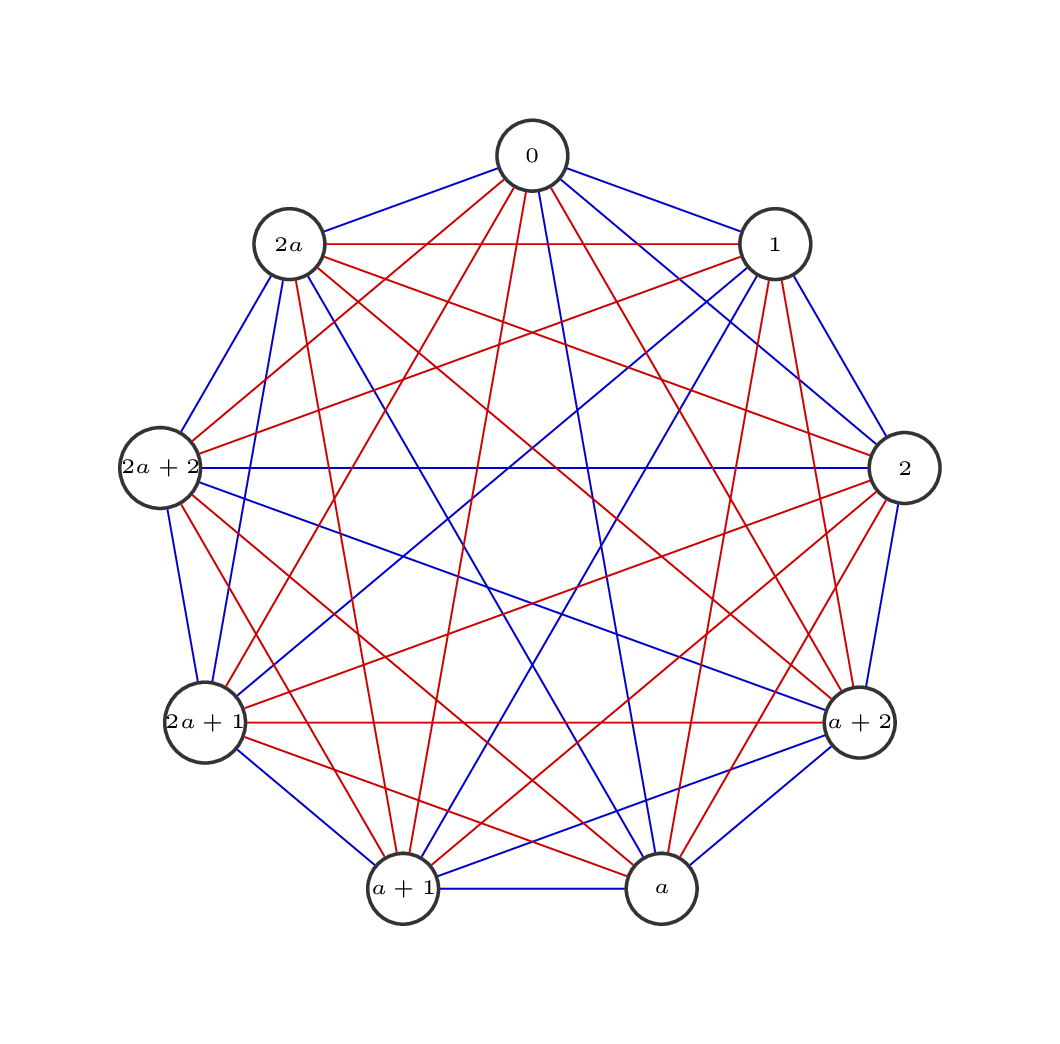
As in any Paley graph, the red subgraph is isomorphic to the blue subgraph. In the special case of \( \Large P_9 \) both red and blue subgraphs are isomorphic to the either of Tensor product \(\Large K_3 \times K_3 \), or Cartesian product \( \Large K_3 \Box K_3 \). A labeling of vertices based on \(\Large \mathbb{F}_9 \) is as follows.
 |
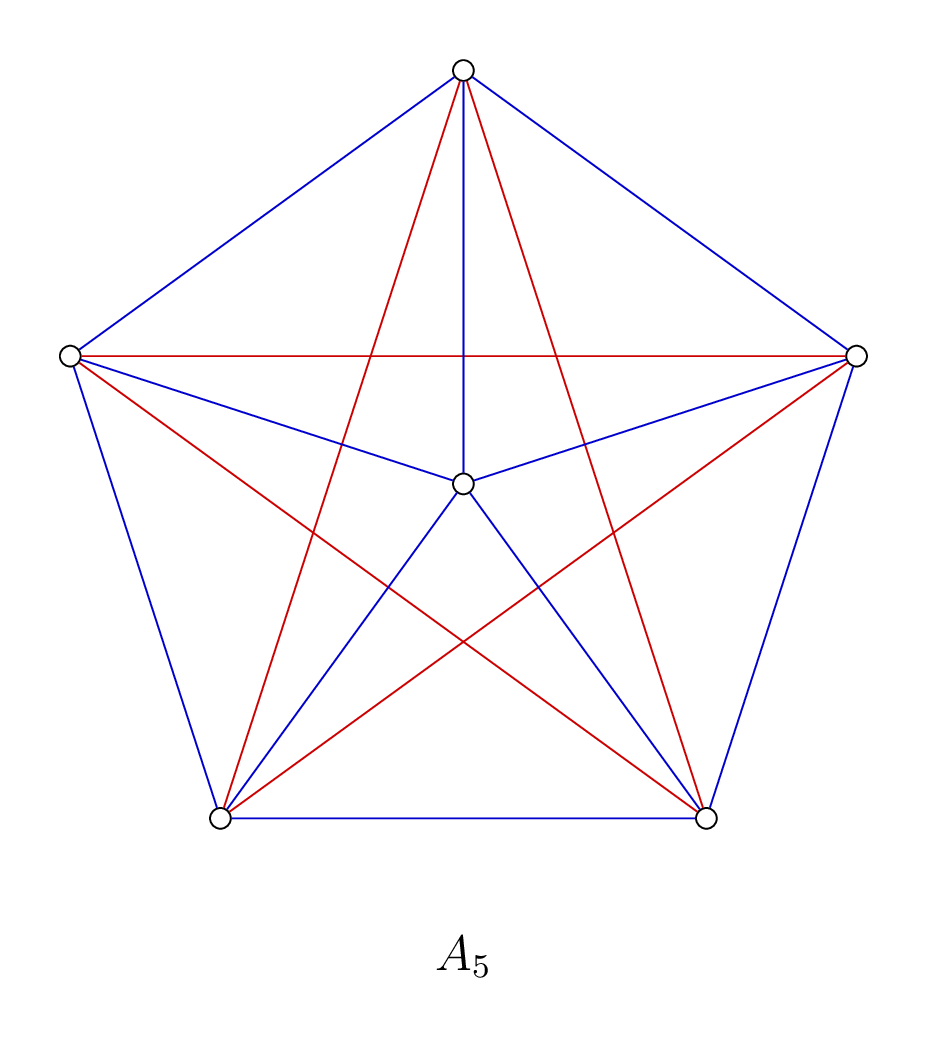
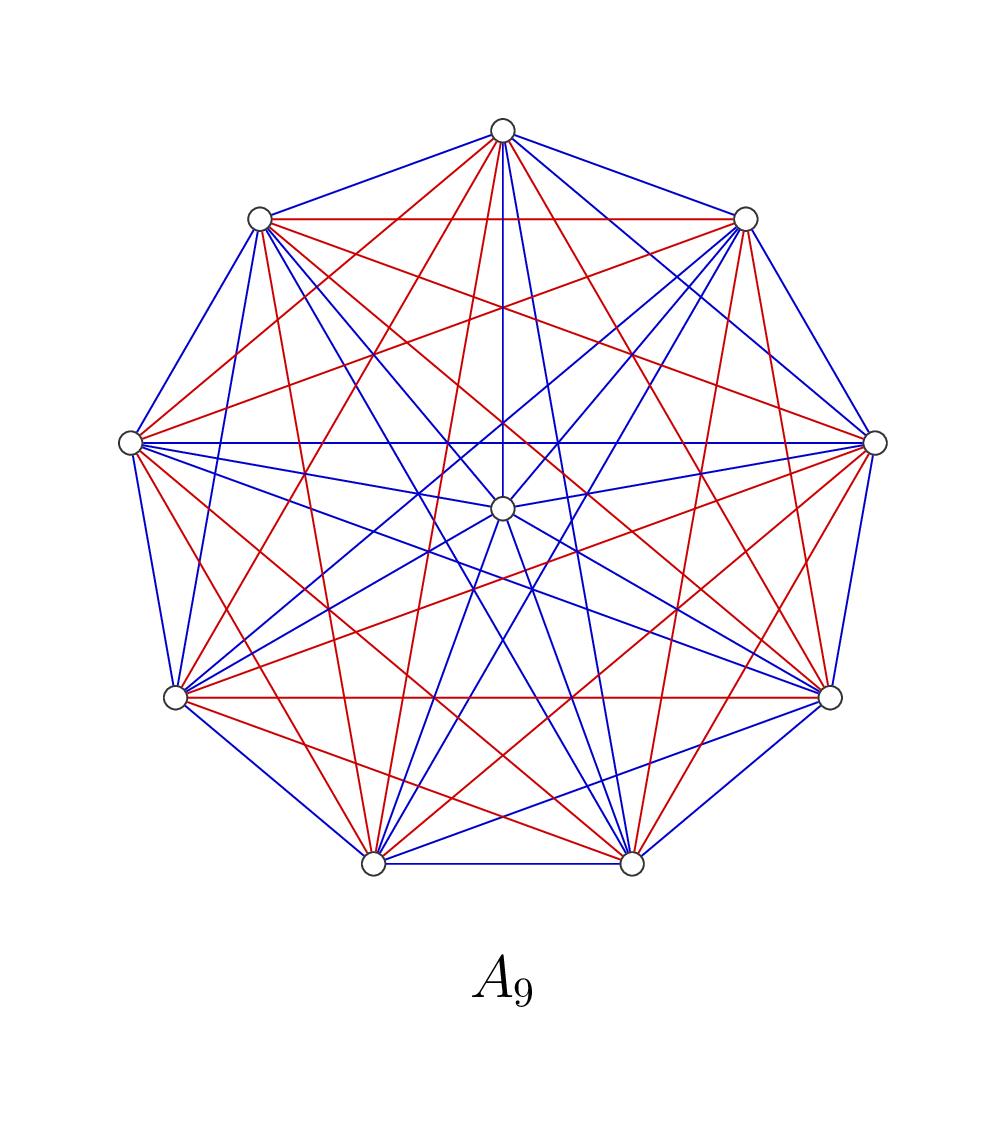
Apex Paley signed graphs, \( q=5,9 \)
 |  |